
Posts

Showing 1 - 12 of 151 Posts
  • Illustration of a go-to-market strategy framework with a product launch at the center connected to audience, positioning, messaging, pricing, channels, sales enablement, and growth planning.
    MarketingStrategyConversionOperations

    Go-To-Market Strategy

    Learn how go-to-market strategy connects audience, positioning, channels, sales motion, launch planning, and measurement.
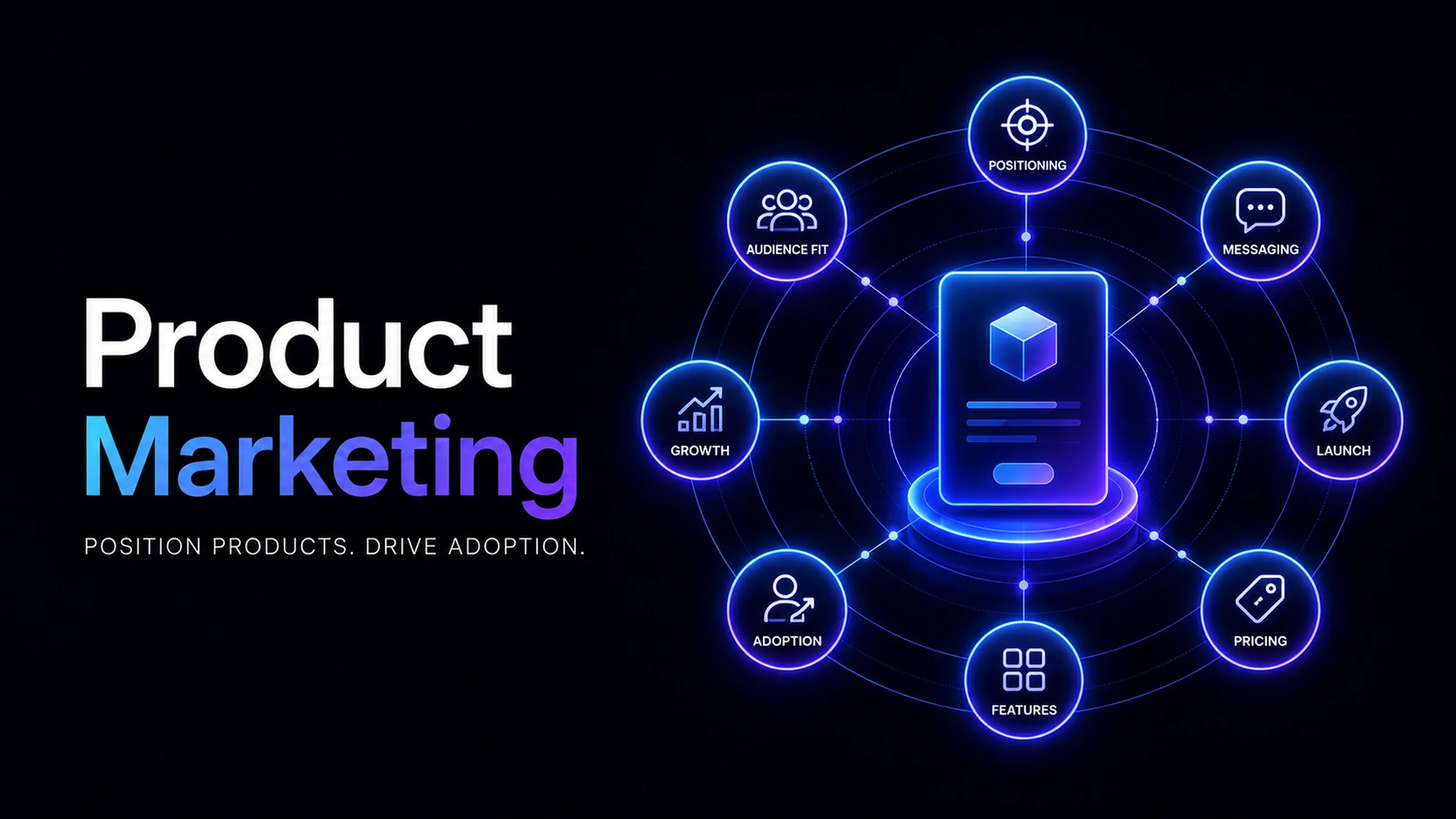
  • Illustration of product marketing showing a product at the center connected to positioning, messaging, launch strategy, pricing, features, adoption, growth, and audience fit.
    MarketingStrategyConversionContent

    Product Marketing

    Learn how product marketing connects positioning, messaging, go-to-market strategy, sales enablement, and product adoption.

  • Illustration of brand marketing with a central brand identity connected to key brand-building elements including recognition, positioning, audience, messaging, consistency, reputation, and trust.
    MarketingStrategyContentTrust

    Brand Marketing

    Learn how brand marketing builds recognition, trust, positioning, and long-term demand through consistent strategy and customer experience.

  • Illustration of a content delivery network (CDN) distributing website content from a central origin server to multiple edge servers located around the world, enabling faster content delivery to users across different geographic regions.
    WebsiteInfrastructurePerformanceTechnical

    CDN

    Learn how a CDN improves website speed, reliability, security, SEO, and content delivery through distributed edge servers.

  • Illustration of a caching system where multiple content requests are routed through a cache layer before reaching the origin server, demonstrating how cached data reduces repeated server processing and improves content delivery speed.
    WebsitePerformanceTechnicalDevelopment

    Caching

    Learn how caching improves speed, CDN delivery, HTTP headers, freshness, invalidation, CMS workflows, SEO, and privacy control.
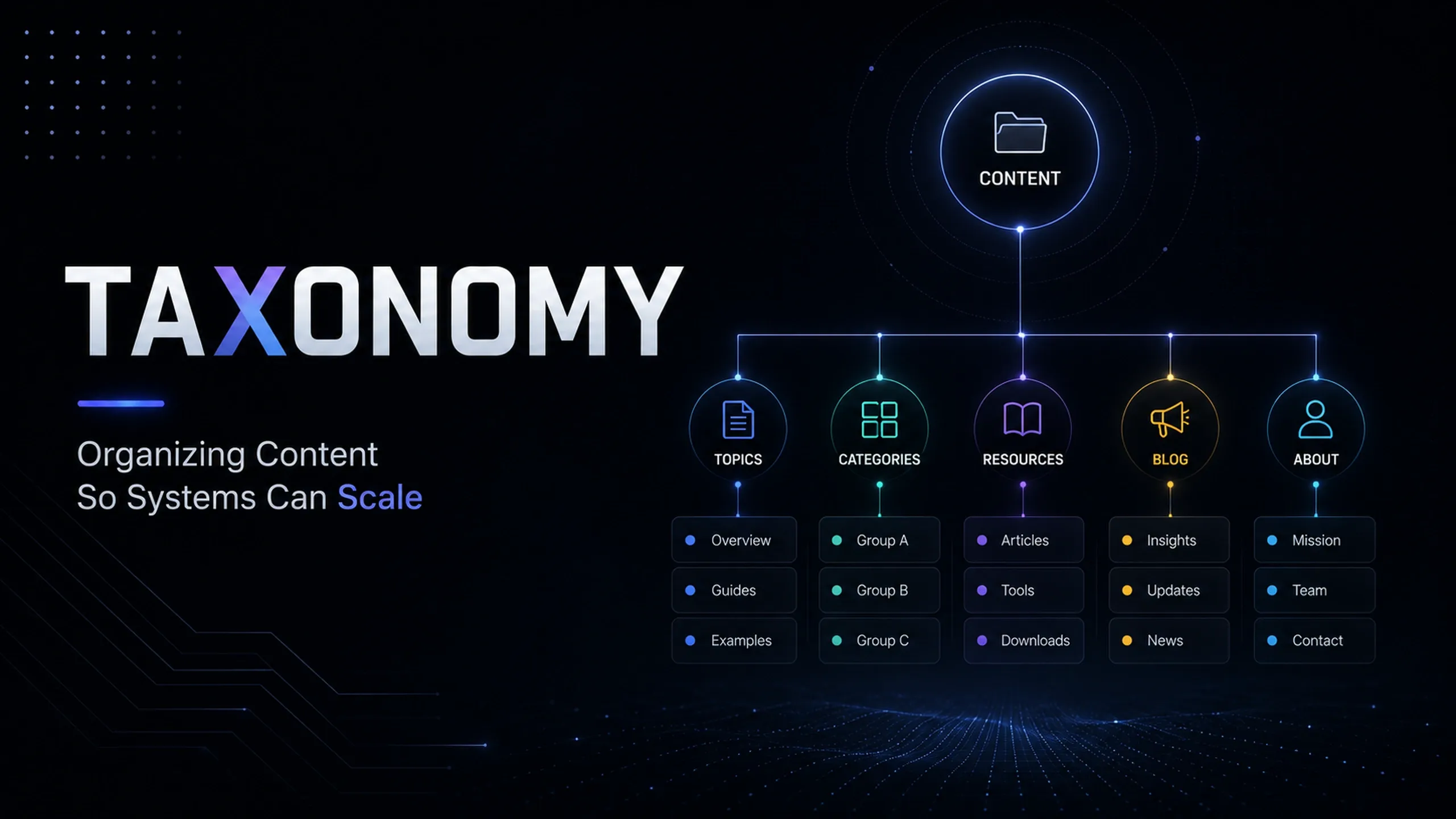
  • Diagram illustrating a content taxonomy structure where content is organized into topics, categories, resources, blog sections, and informational pages, showing how content relationships support navigation, discovery, and scalability.
    ArchitectureContentDataWebsite

    Taxonomy

    Learn how taxonomy organizes categories, tags, filters, CMS structure, SEO, internal links, reporting, and governance.

  • Illustration of a website migration process with old and new website structures, server infrastructure, and SEO monitoring elements connected through a migration workflow, representing a search-friendly site transition.
    SEOWebsiteTechnicalStrategy

    Site Migration SEO

    Learn how site migration SEO protects redirects, crawlability, indexation, content, metadata, analytics, and organic traffic.

  • KPI dashboard visualization showing performance metrics, target achievement, revenue growth, customer satisfaction scores, and an upward trend chart representing business performance measurement and reporting.
    AnalyticsStrategyDataPerformance

    KPIs

    Learn how KPIs connect objectives, metrics, targets, dashboards, data quality, and decision-making across marketing and operations.

  • Illustration of image SEO optimization showing a website image, alt text panel, image search results, WebP optimization metrics, and image performance indicators connected within a search-focused workflow.
    SEOWebsitePerformance

    Image SEO

    Learn how image SEO improves alt text, file names, compression, responsive images, structured data, sitemaps, accessibility, and CMS workflows.

  • Illustration of a website form interface with fields for name, email, and message, shown inside a modern card layout with a submit button and abstract geometric shapes.
    WebsiteUI/UXAccessibilityConversion

    Forms

    Learn how forms improve UX, accessibility, validation, consent, spam control, CRM workflows, conversion tracking, and reporting.
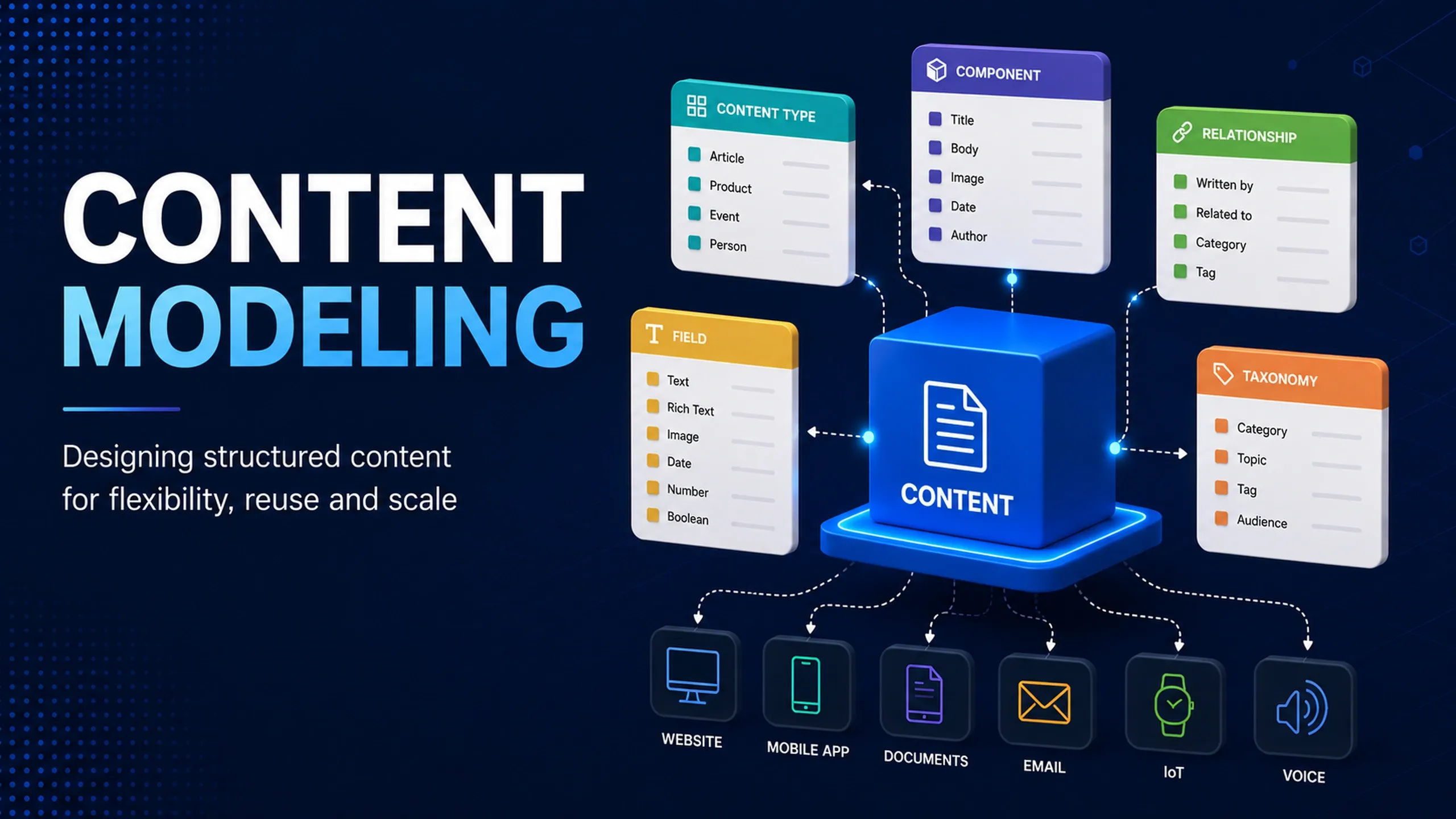
  • Content modeling diagram showing content types, fields, components, relationships, and taxonomies organized around structured content and distributed across websites, mobile apps, documents, email, IoT, and voice channels.
    ArchitectureContentSystemWebsite

    Content Modeling

    Learn how content modeling structures fields, content types, CMS blocks, metadata, relationships, SEO, and reusable content.

  • Data migration illustration showing source databases, files, applications, cloud services, and streams moving into a new data system for analytics, AI, security, and performance.
    DataSystemTechnicalIntegration

    Data Migration

    Learn how data migration protects source-of-truth clarity, field mapping, data quality, validation, integrations, and reporting.